
Strategic Planning
2026-2029 Strategic Plan
Cowley College pursues strategic planning with a focus on continuous improvement. Our Mission, Vision, Core Values, & Strategic Theme guide the planning process which includes: an environmental scan, campus wide Strengths, Weaknesses, Opportunities, and Threats (SWOT) analysis, and identification of strategic issues, institutional priorities, and measurable goals. The strategic plan is approved by the Cowley College Board of Trustees.
The Office of Institutional Effectiveness, the President, and the Administrative Council identified themes from the environmental scan and SWOT analysis allowing for the development of three strategic planning "pillars" to form the foundation for setting, tracking, and obtaining goals.
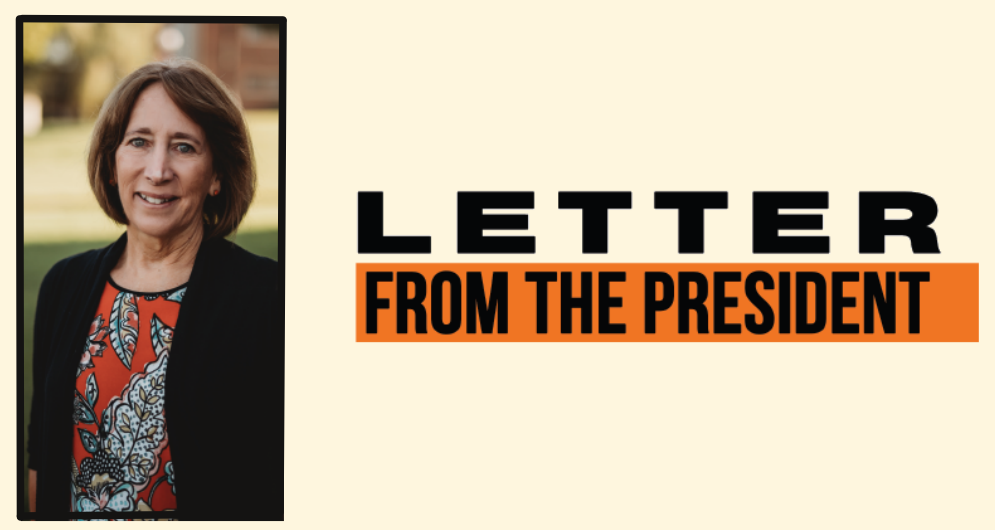
As Cowley College enters a new strategic planning cycle, I am pleased to share the
2026–2029 Strategic Plan, which focuses on fostering prosperity for the College, our
students, and the communities we serve. This plan was developed during a year of thoughtful
reflection and collaboration, with input from a wide range of stakeholders, including
community members, employees, students, and the Board of Trustees
through surveys and goal-setting sessions.
Designed to be forward-looking, the plan incorporates key insights from the Higher Learning Commission’s Trends in Higher Education and is organized around three core pillars: Accessible, Successful, and Invested.
• Pillar One: Accessible emphasizes providing equitable, affordable, and flexible learning opportunities for all.
• Pillar Two: Successful focuses on student achievement, academic excellence, and career readiness.
• Pillar Three: Invested outlines initiatives that strengthen relationships and support investment in faculty, staff, and the broader community.
Grounded in the College’s mission, this strategic framework offers both guidance and
flexibility. It is a living document designed to support our mission, vision, and
values while advancing student success.
As a community college, our success is deeply tied to the engagement and support of
our community. This plan further reinforces Cowley College’s role as a key driver
of workforce and economic development
in South Central Kansas.
I invite you to join us in achieving the goals of this Strategic Plan through your
continued support and partnership.
Sincerely,

Dr. Michelle Schoon
President

MISSION STATEMENT
Cowley College is committed to providing opportunities for learning excellence, personal achievement, and community engagement.
VISION STATEMENT
Champion the relevance of two-year colleges in higher education through holistic learning and workforce development opportunities.
CORE VALUES
- People
- We recognize people as a vital asset to the success of the College and its students.
- We provide a positive learning environment in which we embrace teamwork and growth.
- We create a supportive environment that prioritizes the individual strengths of students.
- Accountability
- We provide a high-quality education while empowering students to take an active role in their success and advocate for their future.
- Our employees are reliable, dedicated to the mission, and focused on delivering excellence.
- We are accountable to the community to educate students who make positive contributions to society.
- Integrity
- We commit to a fair learning environment where academic, personal, and professional standards reflect honesty and integrity.
- We hold ourselves to compliance with high standards in conduct.
- We affirm a commitment to honesty, trust, fairness, and respect.
- Leadership
- We provide impactful opportunities and resources to better serve the current and future needs of our communities.
- We provide a positive atmosphere that fosters personal, educational, and professional growth.
- We empower students and employees to be innovative, creative, and visionary.
STRATEGIC THEME
With integrity and passion, Cowley College advances its mission and vision by supporting the attainment and demonstration of life skills in the areas of critical thinking and problem solving, communications, citizenship, computation, and technology.
ACCESSIBLE
Provide equitable, affordable, and flexible learning opportunities for all
- Expand Affordability & Access to Aid
- Increase need-based & last dollar scholarships
- Streamline FAFSA & award communications
- Provide proactive outreach campaigns for underserved & adult learners
- Primary Owners: Financial Aid, Foundation, Enrollment Management
- Offer flexible learning formats for adults & working learners
- Expand online, hybrid, evening, and weekend sections and pilot 8-week and accelerated “HyFlex” options at two campuses
- Review and adjust scheduling patterns to better accommodate student needs
- Identify barriers for adult learners and provide alternative solutions or extended hours for key services
- Primary Owners: Academic Affairs, Business Services, Student Services
- Improve technology & transportation access, increase outreach to underserved populations
- Improve access through redesigning website wayfinding, student portal & learning management system navigation
- Redesign campus wayfinding signage and address parking congestion
- Reduce technology barriers through multi-campus programs associated with laptop / hotspot needs
- Develop procedures to address the accessibility needs and requirements related to facilities, written sources, learning management system, and website
- Primary Owners: Information Technology (IT), Student Affairs, Facilities, Marketing
- Key Metrics: Enrollment growth in underrepresented groups, Financial aid use, Student satisfaction
SUCCESSFUL
Champion academic achievement and career readiness
- Implement guided pathways for clear progression and transfer outcomes
- Publish guided pathways with term by term maps; embed milestone checks in advising
- Create a “Transfer Clarity” toolkit so advisors can address other schools’ requirements—directly tackling a noted student challenge
- Primary Owners: Advising, Academic Affairs
- Enhance advising, tutoring, and mental health services
- Scale tutoring, embedded supplemental instruction, and mental health services
- Maintain strengths in registration/billing convenience and online access to services
- Primary Owners: Student Success, Counseling, IT, Academic Affairs
- Build employer partnerships for internships and job placement
- Develop an active employer partnership process for internships, clinicals, and apprenticeships
- Expand short term, stackable credentials aligned to local workforce demand, addressing the broader shift toward skills based learning
- Primary Owners: Workforce/Career and Technical Education (CTE), Program Advisory Councils
- Use data-driven strategies to improve retention and graduation
- Analyze early alert analytics and course success dashboards to assess the effectiveness of the current process and explore new tools as needed
- Review the data from the Gainful Employment, Financial Transparency and address equity gaps with program review
- Incorporate responsible Artificial Intelligence (AI) tools in advising and instruction where appropriate to improve communication and streamline processes
- Primary Owners: Institutional Effectiveness (IE), IT, Advising, Academic Support Services
- Key Metrics: Retention & graduation rates, Job placement, Support program engagement, Student
survey gains
INVESTED
Strengthen relationships and invest in faculty, staff, and community
- Develop and retain exceptional employees by fostering a culture of inclusion and shared
governance
- Provide structured professional development in teaching, AI literacy, and inclusive practices; leadership pathways for supervisors
- Review and clarify human resource practices related to employee concerns: communication, workload, pay, staffing, role clarity, and supervisor feedback
- Close employee survey performance gaps on culture and morale
- Primary Owners: Human Resources, Professional Development Team, Administrative Council
- Increase alumni, donor, & business engagement
- Relaunch alumni network and donor stewardship tied to workforce initiatives and scholarships
- Expand active community partnerships through employer advisory councils for workforce development
- Primary Owners: Foundation, Academic Affairs, Workforce/CTE
- Maintain compliance while implementing practices to minimize risk, enhance operational
efficiency, and support financial stability
- Develop a 5-year facility maintenance plan and a 5-year technology update plan
- Increase revenue from alternate sources to maintain fiscal growth and stability
- Review and implement policies and practices related to data privacy, safety, business continuity, and incident response exercises
- Primary Owners: Foundation, Administrative Council, Workforce/Career and Technical Education (CTE)
- Key Metrics: External funding, Active community partnerships, Employee satisfaction & retention, Shared governance participation, Employee survey, & Advisory council survey

Global learning outcomes (GLO) focus on the skills and knowledge all students should be able to demonstrate as a result of faculty established curriculum and quality teaching and learning.
1. Communication Skills
Students will demonstrate the ability to:
A. Write in an accurate, correct, and understandable manner.
B. Comprehend written information and analyze, summarize, and apply what has been
read to a specific task.
C. Speak in an accurate, correct, and understandable manner.
D. Maintain positive relations with others and resolve conflicts.
2. Computational Skills
Students will demonstrate the ability to:
A. Apply mathematical concepts and reasoning by analyzing and using numerical data.
3. Critical Thinking/Problem Solving Skills
Students will demonstrate the ability to:
A. Recognize and define problems.
B. Devise and implement solutions.
4. Computer/Technology Skills
Students will demonstrate the ability to:
A. Use computer literacy skills to achieve academic and career goals.
B. Retrieve and manage information through the use of the Internet.
5. Citizenship Skills
Students will demonstrate awareness of:
A. Cultural, social, and artistic diversity.
B. Ethical principles such as honesty, integrity, and tolerance.
C. Knowledge necessary to achieve financial stability.
D. Civic responsibility through community involvement.
E. Working together in a group to reach a common goal.
Board of Trustees
Dr. Alan Marcotte - Chair
Brett Bazil
Stanley Cochran
Bob McGregor
Jacinda Shaw-Kinzie
Joe Shriver
Phil White
Gary Wilson
Administrative Council
Dr. Michelle Schoon
President
Holly Harper
Executive Vice President of Finance and
Administration
Paul Erdmann
Vice President of Information Technology
Dr. Jason Kegler
Vice President of Student Affairs
Dr. Scott Layton
Vice President of Academic Affairs
Dr. Ryan Burkett
Executive Director of Institutional
Effectiveness
Jeff Fluty
Athletic Director
Dr. Brooke Istas
Cowley Education Association (CEA)
President & Faculty Liaison
Pillar Teams
Accessible:
Chris Absher
April Beeson
Stephanye Edwards
Carissa Honkamp
Shelby Huddleston
Lauren Hughes
Dr. Brooke Istas
Stefani Jones
Dr. Scott Layton
Stephanie Miller
Wendy Neal
Darci Sampson
Jennifer Searle
Dawn Simpson
Julianna Smarsh
Matt Stone
Tiffany Vollmer
Successful:
Lynlea Bartlett
Holly Benton
Lynell Durham
Stephanye Edwards
Jeff Fluty
Rebecca Holman
Dr. Brooke Istas
Rhoda MacLaughlin-Ramirez
Amy McWhirt
Paola Medina
Greg Mink
Brenda Romesburg
Kristi Shaw
Julianna Smarsh
Meg Smith
Peyton Snively
Kari Stephenson
Invested:
Andy Bohn
Chris Cannon
Zach Cooper
Paul Erdmann
Jeremy Fortner
Micah Fry
Holly Harper
Rebecca Holman
Tim Kennedy
Frank Owens
Stephanie Miller
Suvanah Perdue
Dr. Michelle Schoon
Matt Stone
Megan Sweeney
Tiffany Vollmer